


It may only be June, but summer was definitely in the air this past Tuesday—and so were the carrots! Eastie Farm’s staff, Climate Corps, and crew of eager volunteers spent the day out in Concord lending a hand (and plenty of enthusiasm) to our friends and partners at Gaining Ground.
For those who don’t know, Gaining Ground is an organic, no-till farm that grows fruit, vegetables, herbs, and flowers and donates 100% of its harvest. That means their nutrient-rich produce ends up at schools, food distribution organizations, food pantries, shelters, and other transitional living centers. Gaining Ground is committed to regenerative farming practices that feed not just people, but the soil itself, protecting microbial life and building resilience with every harvest.

We kicked off the day with a tour of the propagation house, where trays of seedlings, including watermelon and lettuce, were just beginning to take root. From there, we moved on to the tomato greenhouse, where sweet alyssum (a dainty white flower) grows alongside the tomatoes. Turns out, this flower attracts a parasitic wasp—nature’s best defense against the hornworm, a notorious tomato-chomping pest. Who needs pesticides when you have beneficial bugs doing the work?

After admiring the kale and chard beds—two of the leafy greens that often find their way into our distribution bags—it was finally time to dig into the task of the day: harvesting carrots. Seventeen volunteers got to work on two long beds, pulling up bright orange roots and saving the leafy tops for pesto (yes, carrot top pesto is a thing—recipe below!).
As the day wrapped up and we were told it was time to pack up, there was one small patch of carrots left. Naturally, we couldn’t walk away, so we rallied with a new motto: No carrot left behind. By the time we finished, we had filled 18 crates and tasted one or two along the way.
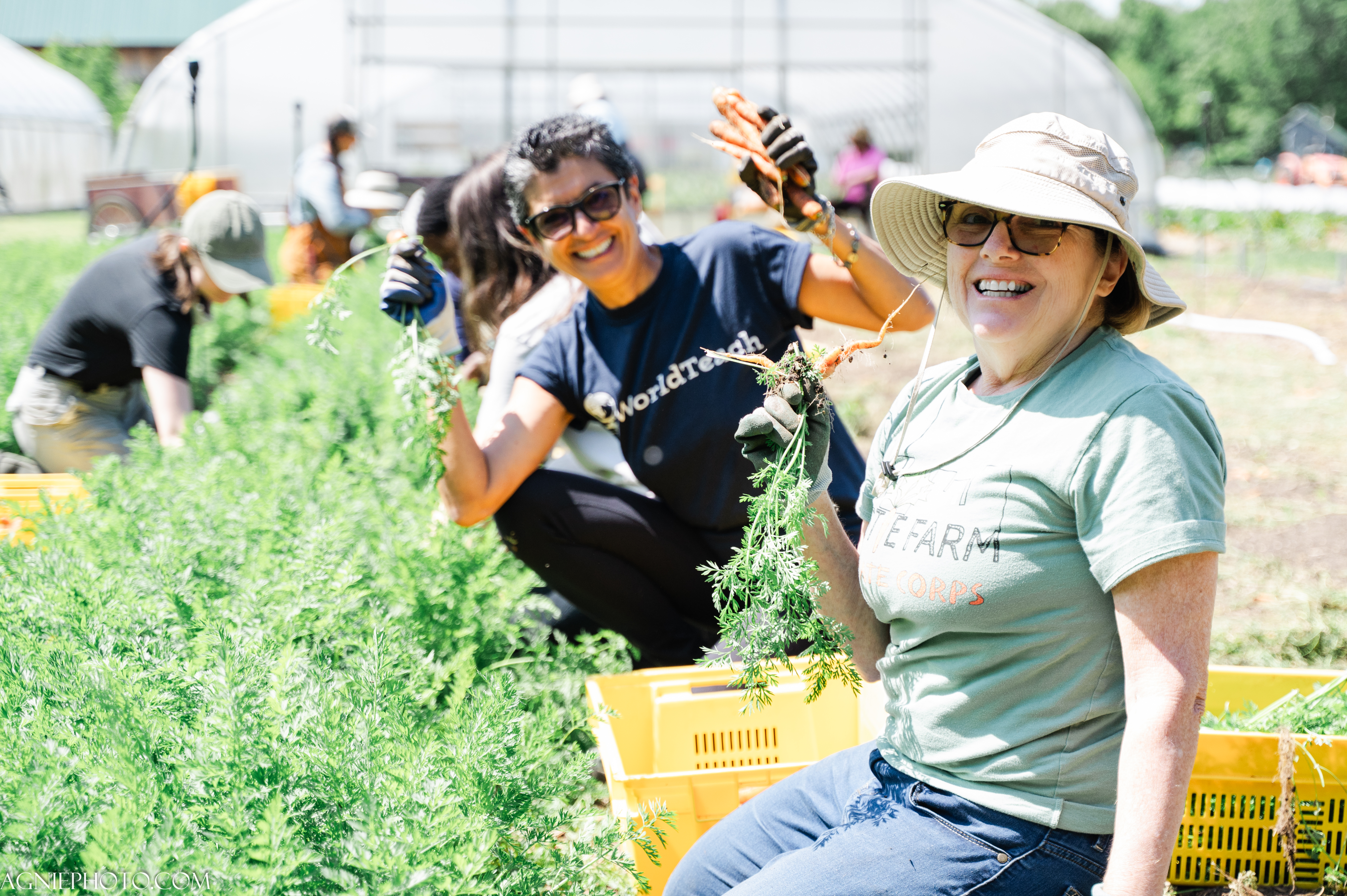

A huge thank you to our incredible partners at Gaining Ground for having us, sharing your knowledge, and working alongside us in this mission. We left with dirty hands, full hearts, and a serious admiration for just how much a community farm can do.

Check out this recipe to use your carrot top greens!
