

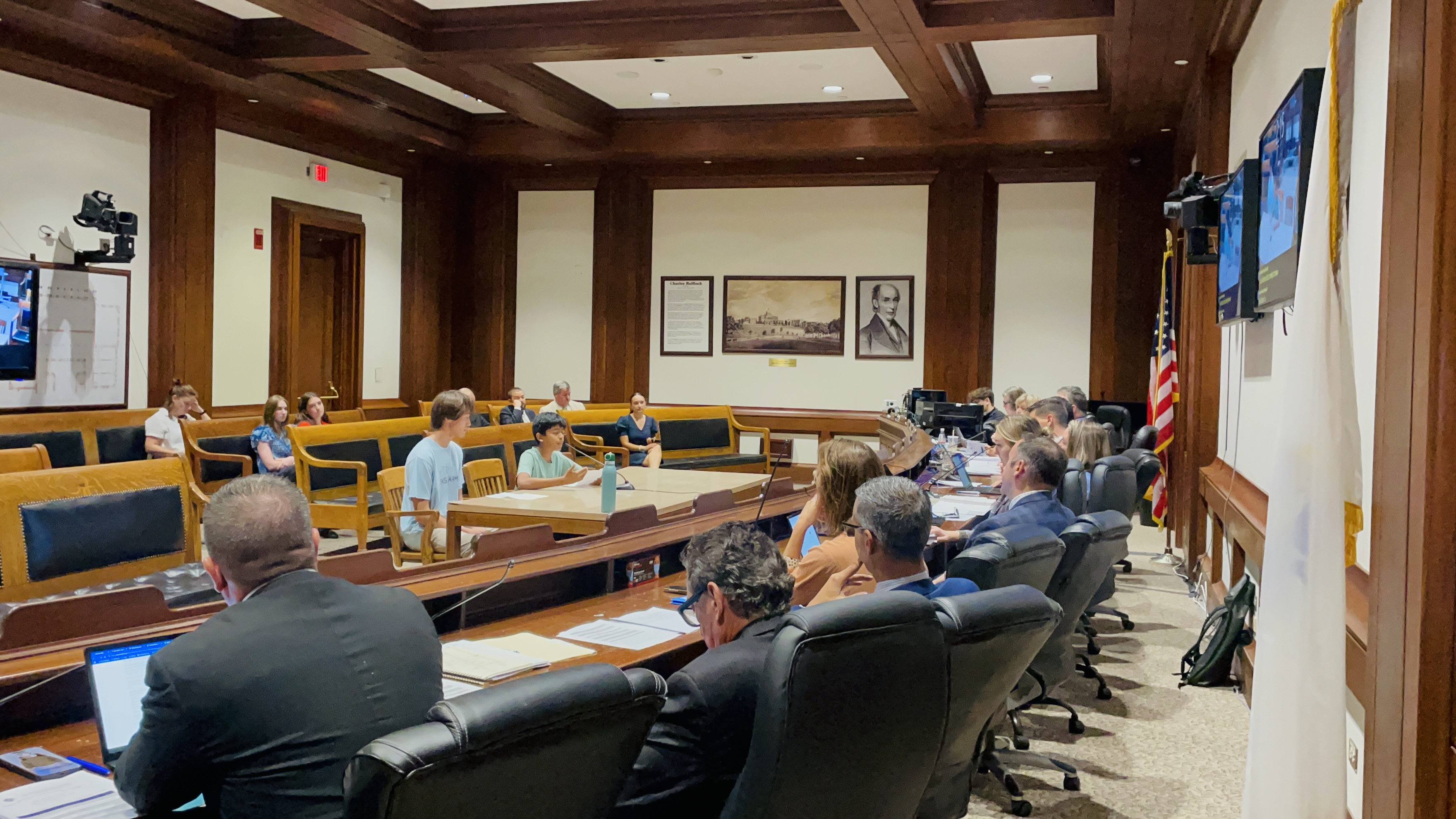
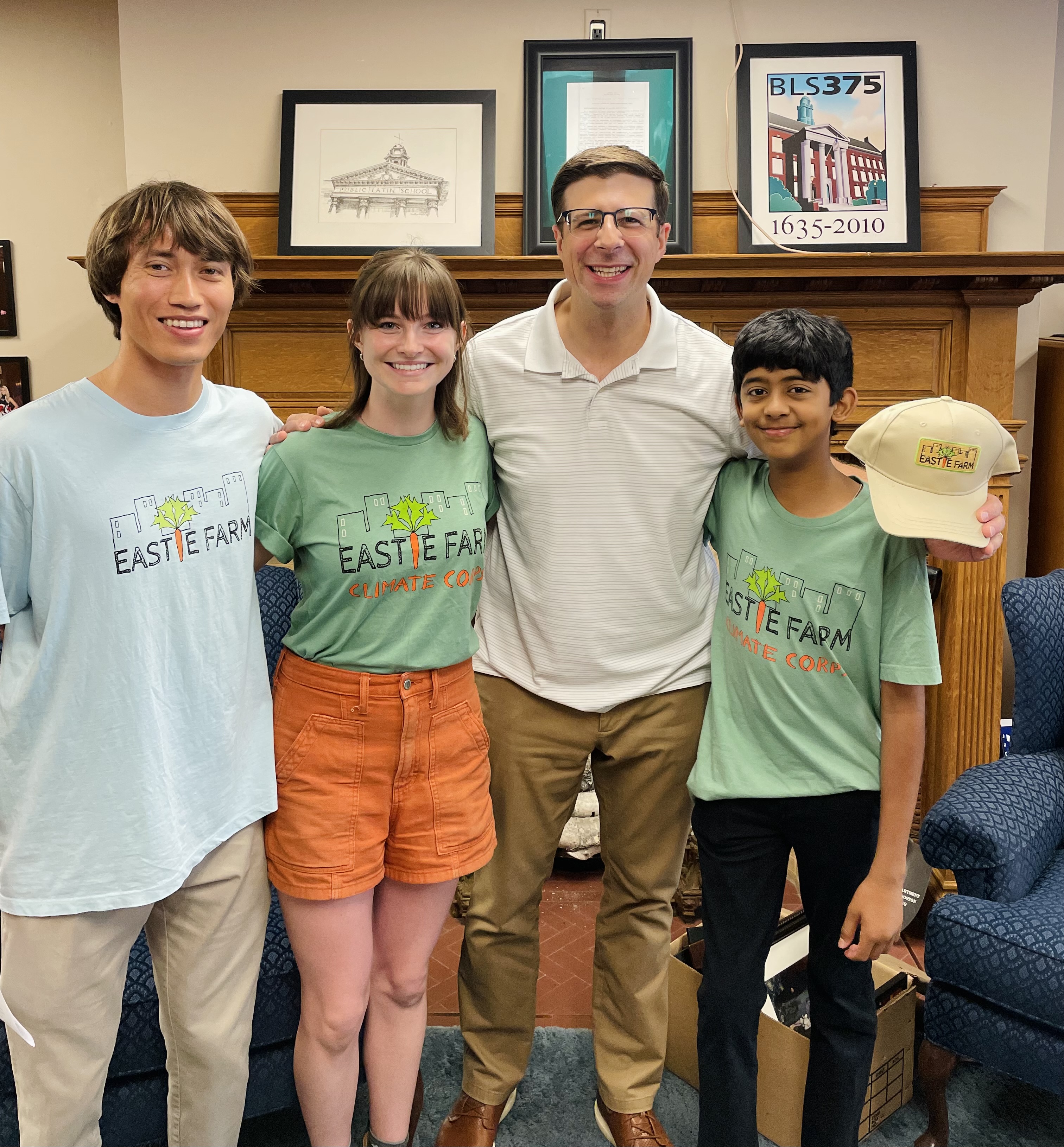
Yesterday, representatives from Eastie Farm’s Climate Corps testified before the Massachusetts Joint Committee on Agriculture and Fisheries in support of a new bill that could be a major step forward for food justice across the state.

So, what would this bill do?
The proposed legislation would establish a Food Justice Frontline Program, which would provide funding to Nonprofit Food Security Organizations—like Eastie Farm and many others—that provide Food Security Jobs in food production, distribution, preparation, and delivery or offer land for agriculture to low- and moderate-income residents.
But this bill is about more than just jobs. It’s about who those jobs are meant to support.
Funding would help these organizations create Food Security Jobs specifically for individuals living in Overburdened Communities—areas that face environmental and economic challenges.
The bill also strengthens key food access programs like SNAP and the Healthy Incentives Program (HIP) by directing the Department of Transitional Assistance to expand outreach statewide. And in an exciting move, it engages youth under 18—especially those from Overburdened Communities—by offering stipends to those who help promote awareness of these food access programs.
This is more than a bill. It’s a vision for food justice rooted in community.
Read the full bill here.
Watch or read Eastie Farm’s testimony below written by Vedant Ramesh

“Hello committee members,
My name is Vedant Ramesh. I’m 14 years old, I live in East Boston, and I attend the Commonwealth School in Back Bay. I moved here just a month ago, and I’m already deeply connected to my new community through Eastie Farm’s Climate Corps program, where I serve as a Student Steward fellow.
As part of Climate Corps, I help educate others about food systems and sustainability. One of the most eye-opening things I’ve learned is about Eastie Farm’s Community Supported Agriculture—or CSA—program, and its sliding scale pricing system, based on something called “The Green Bottle.” It highlights how people with fewer resources often have to choose between essentials like food, rent, or healthcare. In East Boston, that’s a reality for many.
East Boston is a food desert. For more than 60,000 people, there’s only one major supermarket. That shocked me. No one—especially in a state like Massachusetts—should struggle to access healthy food. That’s why I support Bill S.63.
This bill would provide up to $500,000 in grants to food justice organizations statewide. That could help places like Eastie Farm expand programs, and allow high-need areas—like Hampden County, where nearly 50% of adults are food insecure—to start CSA programs and reduce hunger.
It would also create jobs—people are needed to grow, pack, and distribute food. These are local, meaningful jobs that communities desperately need.
One part of the bill I really care about is the multilingual public awareness campaign. In East Boston, many people speak only Spanish. Language shouldn’t be a barrier to getting food assistance like SNAP. The campaign would also involve youth under 18 to help spread awareness. That’s exactly what I do at Eastie Farm—and it works. It empowers us while educating the community.
Today is actually CSA packing day at Eastie Farm. I left early to be here, but the rest of the Climate Corps couldn’t—they’re packing food for our neighbors. So I’m speaking on their behalf too, and for everyone working hard every day to fight food insecurity across Massachusetts.
Before I go, I want to share something that stayed with me. Recently, Eastie Farm’s director, Kannan Thiruvengadam, shared with me a message he received during COVID from a student he once taught. It said: “Mr. Kannan, I haven’t eaten in two days.” That was a child. No one should ever have to say that. Not during a pandemic—and not now.
This bill gives communities the tools to fight food insecurity—together.
Thank you for your time, and I strongly urge you to support Bill S.63.”