A Visit from Students at the Learning Project
A blue sky set the scene for an educational walk with a group of students from the Learning Project. 17 first graders joined a walk through East Boston, led by Kannan. Beginning with a snack break at Lewis Mall Harbor Park, we admired the skyline across the water. After the snack, Kannan led an exercise in tracing the path of the sun. He asked the students to move their hands from the location they thought the sun would rise to the location they thought the sun would set. The path of the sun was then explained, reasoning that the sun always rises in the East. Sea level rise and flooding was discussed, and students noticed the hills and the paths that the water would take in the event of flooding.

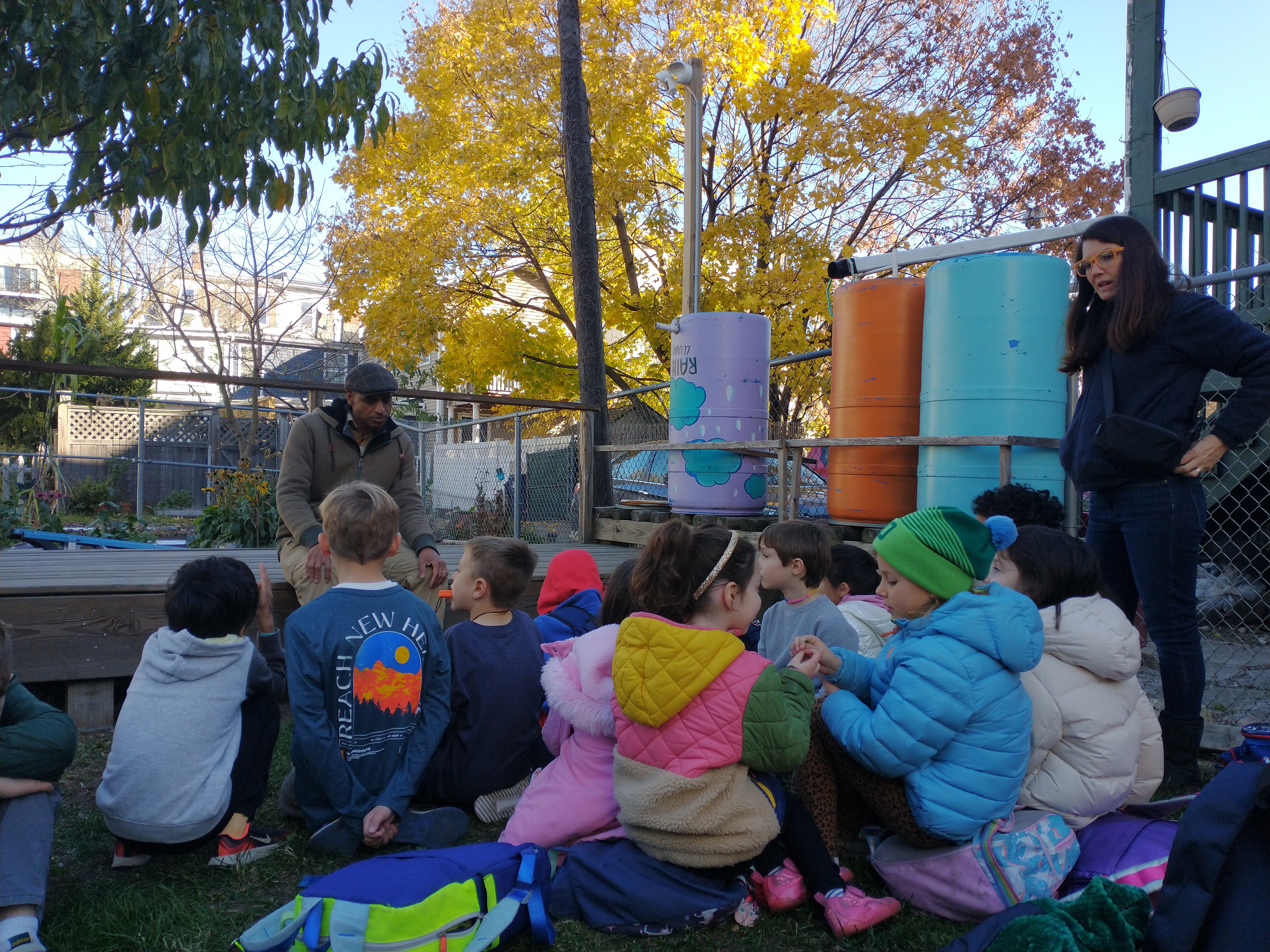
The group stopped at Eastie Farm’s Sumner Street location. After several kids jumped on the stage and danced around, enjoying the space, Kannan walked us through the concept of the “three sisters.” If you haven’t learned about this, the “three sisters” planting method was used by indigenous people to grow corn, squash, and beans. The idea is that the corn will grow tall, allowing for the beans to be able to grow up the corn stalk. The squash leaves will protect the ground around the corn, and help provide nutrients to the soil. The students seemed to grasp this concept, and a group of three enthusiastically demonstrated what this looked like, each taking the role of one of the plants.
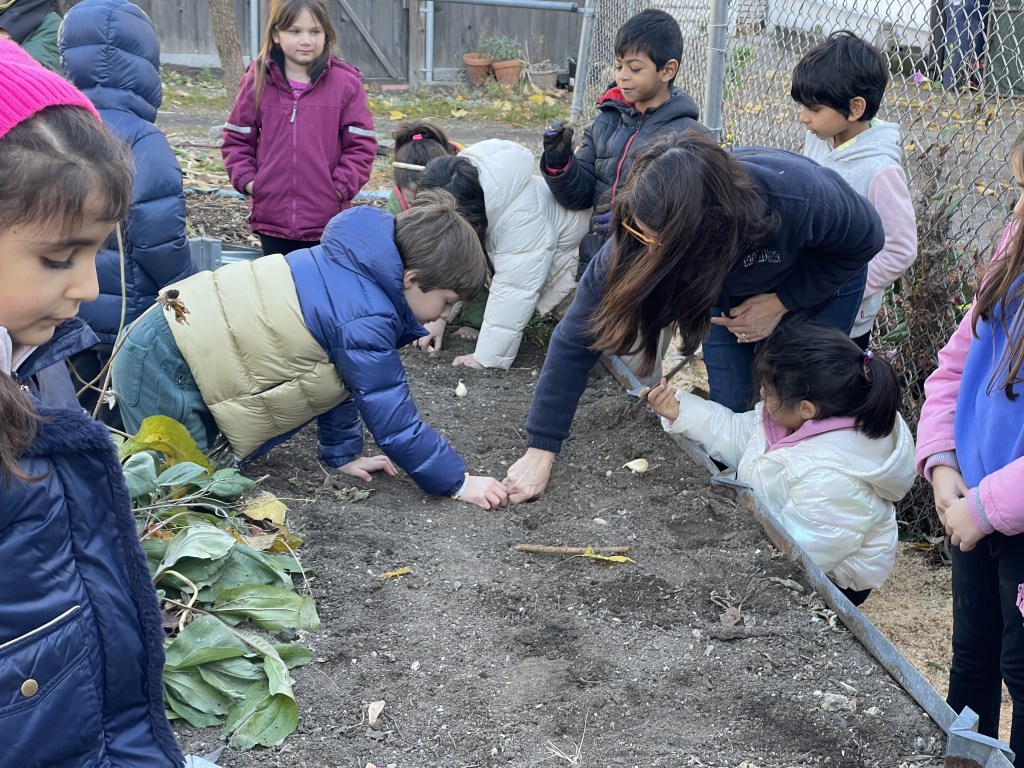
Jenny met us at the garden, bringing with her a bag of garlic bulbs. She asked the students what they had learned so far, and one said that the tides rises “12-13 feet every day.” I was impressed by his memory of this fact. Jenny spoke to the kids, explaining how garlic is planted, using terms that the students said they recently learned in school. “Harvest” was one of these newfound words for them. We broke the garlic bulbs into separate cloves, each person taking two to the bed that was prepared to be planted. We lined up the garlic bulbs into three rows, with Jenny explaining that the plants need to be ‘two hands apart’ so that they have the proper room to grow. The students used their hands to measure this distance, and pushed the bulbs into the ground, with the ‘tails’ pointed upwards as we had been taught. There was a question of when the garlic would be ready to harvest. Some of the guesses from the students included “September” and “December”. After these guesses, Kannan explained that the garlic should be ready in the spring, but that sometimes it grows way sooner when the winter weather is warm. He said that the garlic was ready in December one year!

On the walk back to the greenhouse, Kannan and Jenny made sure to acknowledge the importance and meaning behind the murals on the walls of a tunnel we walked through.

The mural depicts marine animals swimming next to a cityscape. A group of teenagers painted this mural to represent sea level rise. They explained that the teenagers wanted to paint water flowing around the city, but that they were told not to, since people may see it as scary. Either way, the mural is a commentary on what will happen if we don’t address climate change before it’s too late. Being a coastal city, it’s not too far-fetched to think about dolphins swimming down Logan Airport’s runway if things don’t start changing for the better.
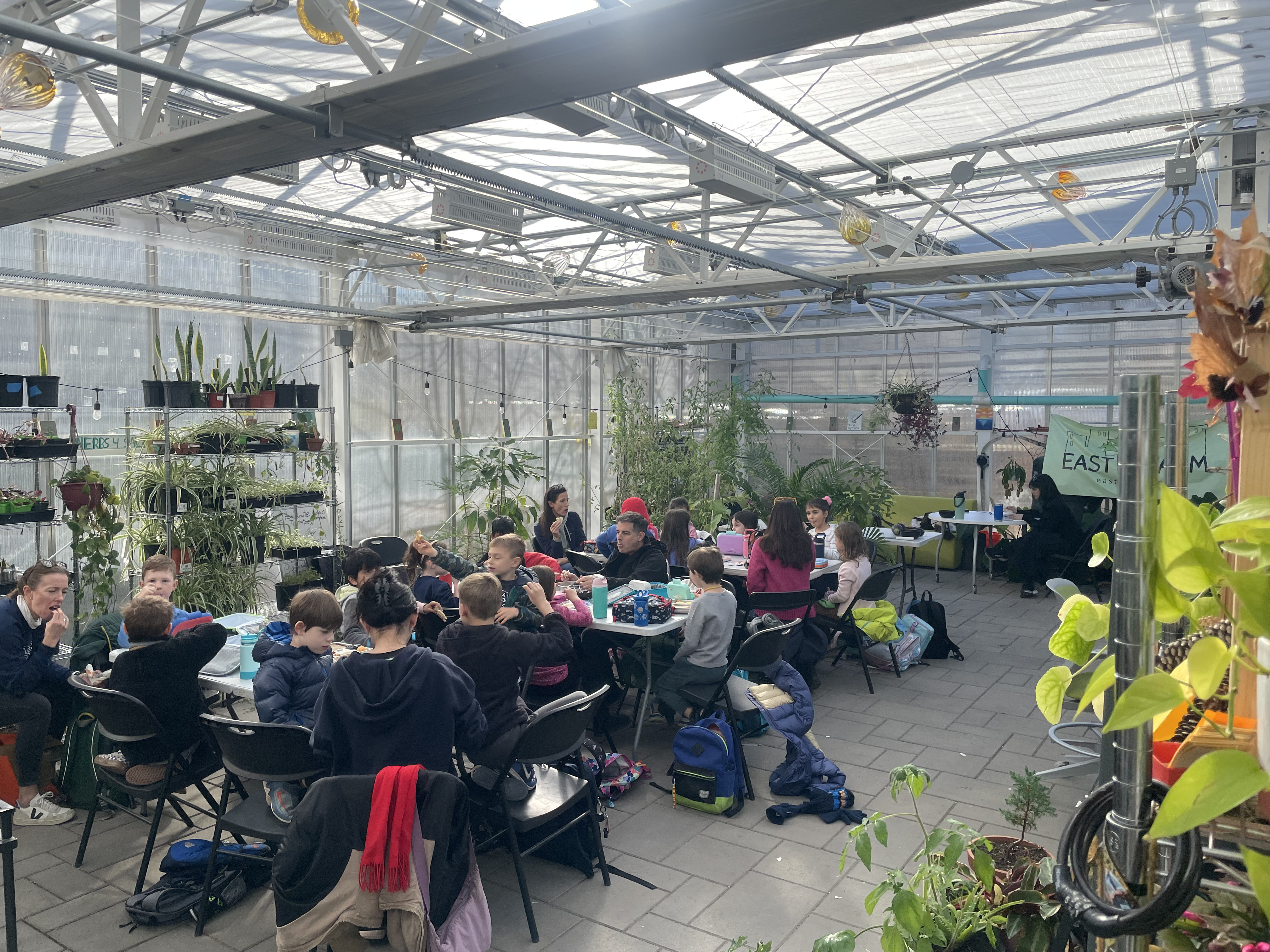
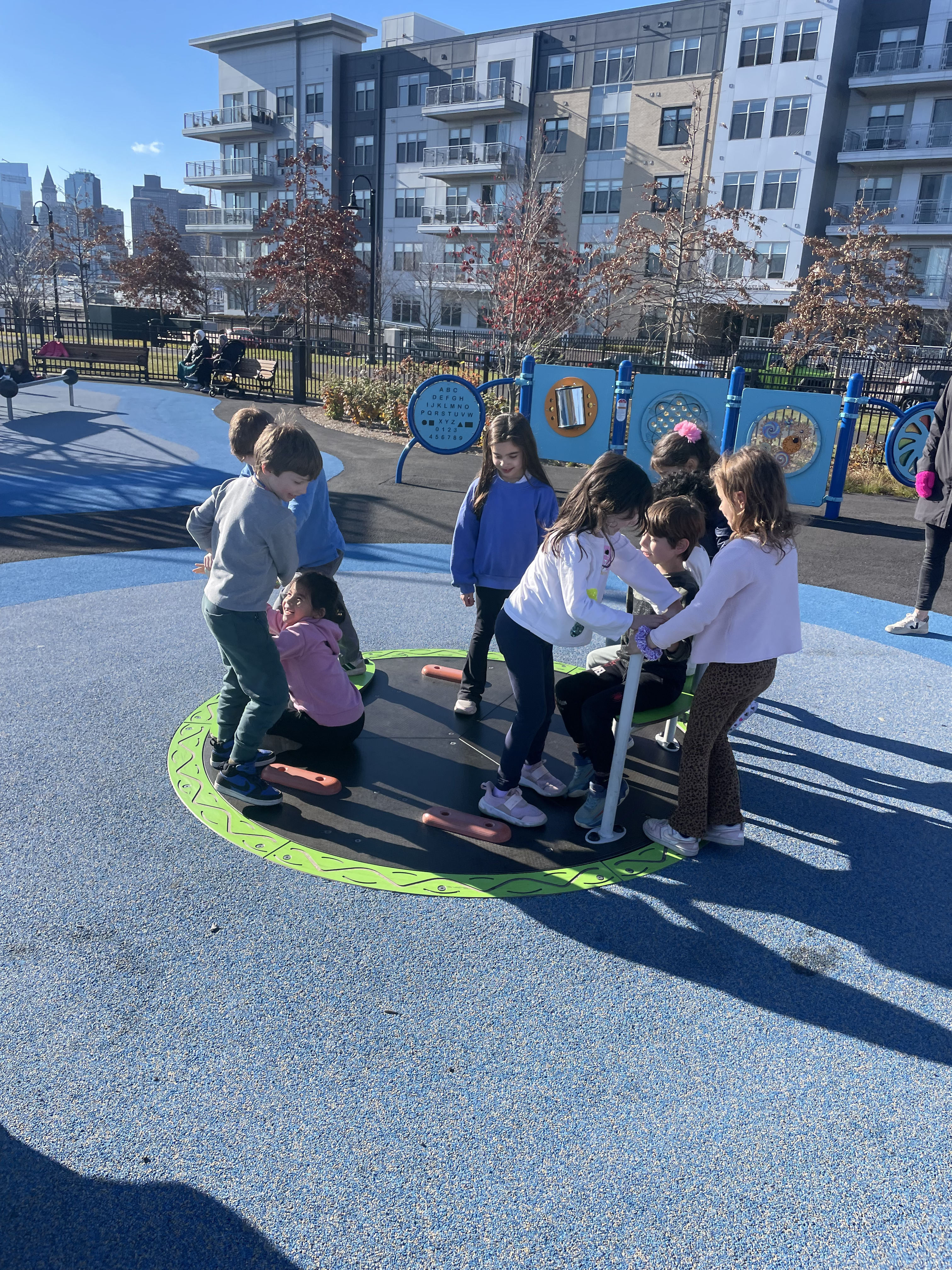
After a day filled with environmental education, the trip ended with a lunch break at the greenhouse, and time spent playing on a local playground. As someone who grew up surrounded by cornfields and cows, I found myself wondering what it would be like to grow up in a city. After this visit from the students, I think that despite the lack of corn and cows everywhere, they are going to have an equally impactful connection to the world around them. To care about something, you need to know about it. The environmental education that these students are getting gives me hope that the younger generations will truly care for the earth that we have.