By Gabriel
For the past year, Eastie Farm has been running a Climate Corps fellowship program in efforts to bring more people into their work of promoting environmental justice. The program, which includes fellows from 16-23 years old, allows youth to take part in Eastie Farm’s mission to create more healthy and equitable communities and environments. The fellowship is meant to instill young people with the knowledge and skills that will help them pursue green jobs, or careers with a focus on sustainability, through a combination of work experience and education.

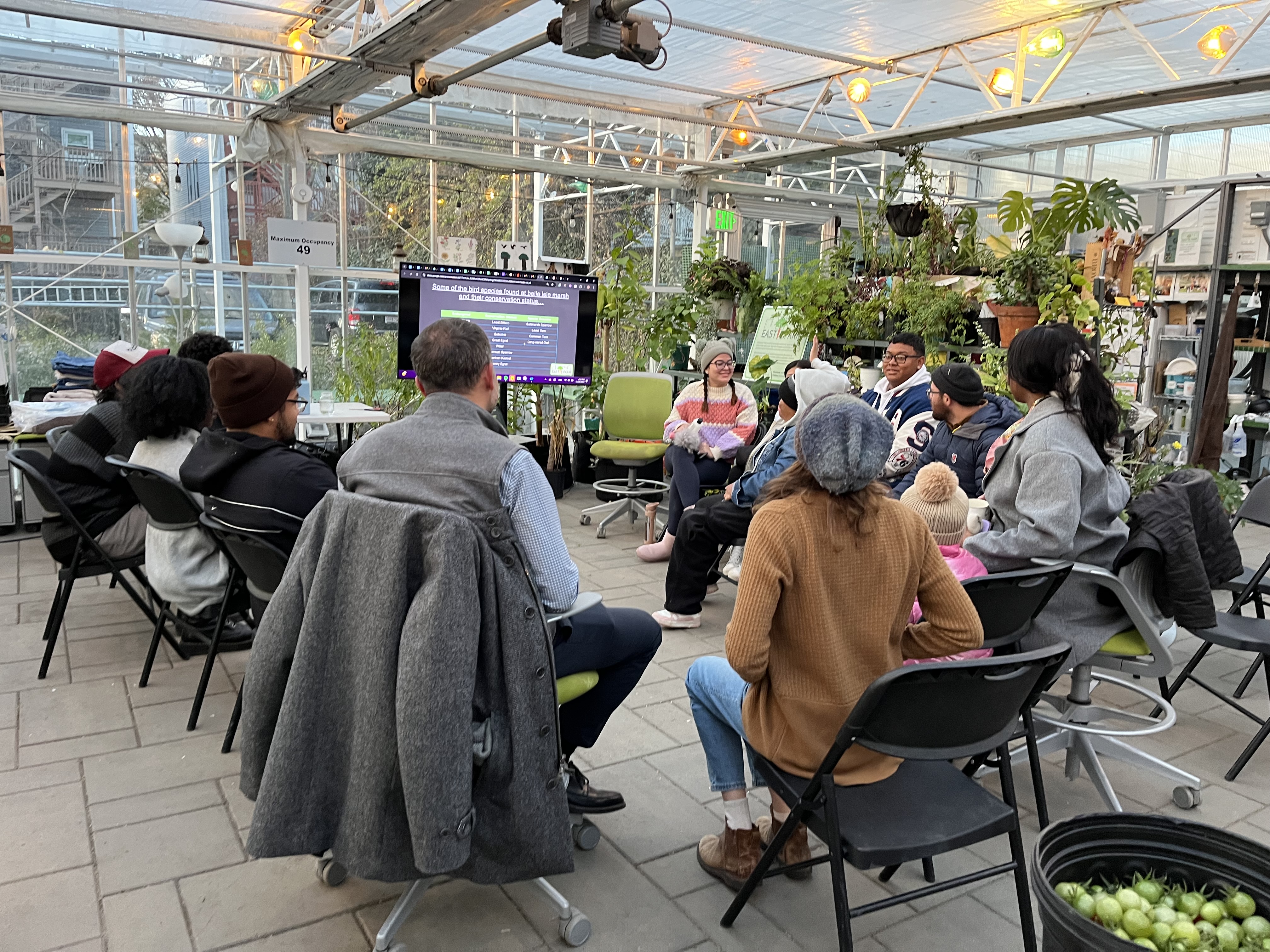
As the program began to approach its end in the fall, Eastie Farm brought in an array of green job employers to give presentations. These were meant to expose the fellows to existing companies, non-profits, and government agencies that were working to promote sustainability and that could inspire future career paths for fellows to pursue once the program was complete. They also served as an opportunity to network, allowing fellows to meet potential employers in person, receive contact information, and ask questions about their organization, open positions, and what was necessary to attain them. All of the presenters displayed kindness and enthusiasm, reaffirming for fellows that there were others out there who shared their vision of a sustainable future and who were working to make it a reality.
One thing that was apparent from these presentations was the immense variety in the world of green jobs; the presenters ranged from electricians to farmers to policy makers to supply chain facilitators to educators. This highlighted that there was a role for anyone who has hopes to work a green job, regardless of background, skills, or interests. Another pattern that stood out was the diversity in experience and career paths; almost every presenter pointed out that their trajectories were not linear, and challenged the idea that you had to decide and stick to a specialized field early in life (or at all).
These presentations also showed that green jobs do not have to come at the expense of the low pay, overwork, and insecurity that is often associated with “ethical” or “good” work; many offered enticing salaries, good benefits, and healthy work-life balances. What also felt noticeable was the sense of purpose that the presenters had in their work. It was clear that they had pursued careers that were meaningful to them, prioritizing their desire to make the world a better place through the work they did.
These green job presentations were an inspiring and hopeful conclusion to the Climate Corps program, helping fellows to become exposed to, connect with, and pursue careers that would allow them to continue on their path of becoming agents of positive change.