September 9, 2025
Urban Agriculture Ambassador & Farming Program Manager
Eastie Farm
This Sunday morning we found the peach tree by the stage in our Sumner Street garden cracked in half. It was not windy enough to cause this and no lightning struck; so what happened?
Last weekend (Sept 6 & 7, 2025) the Boston area received more than an inch of rainfall. Not much in the scheme of things. Even so, with it, came some loss and some lessons.

A grisly scene confronts us on Sunday morning (Sept 7, 2025)
Lessons:
- Prune the tree
Pruning is one of the most important things you can do for your tree throughout its life, starting from the time it is a sapling. This particular tree was a volunteer, meaning that the tree was not intentionally planted by EF or another person, but rather sprouted out of a discarded pit. This tree has had some pruning done through its 3 years of life, however this pruning was done to maintain access to the path and stage nearby, rather than the tree’s health.
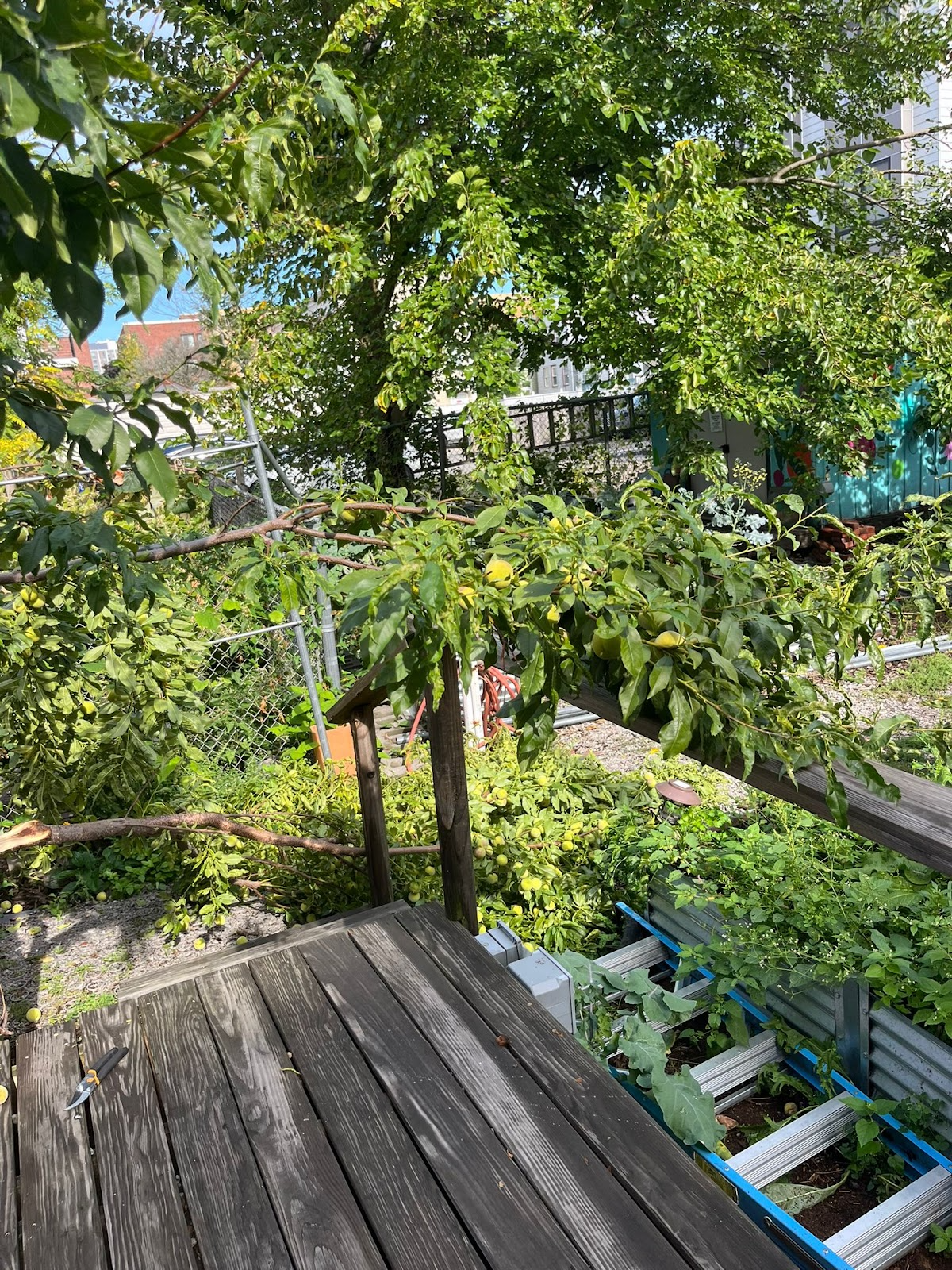
View from the stage
When pruning a cultivated fruit tree the two most important factors to consider are the time of year and the shape / structure of the tree. Shaping / pruning of a tree is done to keep the tree from breaking and to maximize quality of fruit production. Pruning should mostly happen at the end or start of a growing season while the tree is dormant. Pruning at this time is done with the goal of shaping and training the tree. Removing larger quantities of branches is done to minimize weak points, to increase air flow between branches, and reduce and/or maintain the tree’s size (harvestability). Tall trees are harder to harvest than smaller ones.
When to Prune:
- Dormant pruning November or March: When most pruning should happen. You can take as much a ¼ the volume of the tree per year. This helps you guide the tree in shape and reduce areas of weakness (this is one of the things we didn’t do that we should have!)
- Summer pruning June – September: Maintenance in the summer time you can prune the ends of branches to encourage business and keep the branches from getting leggy or reaching too far out.
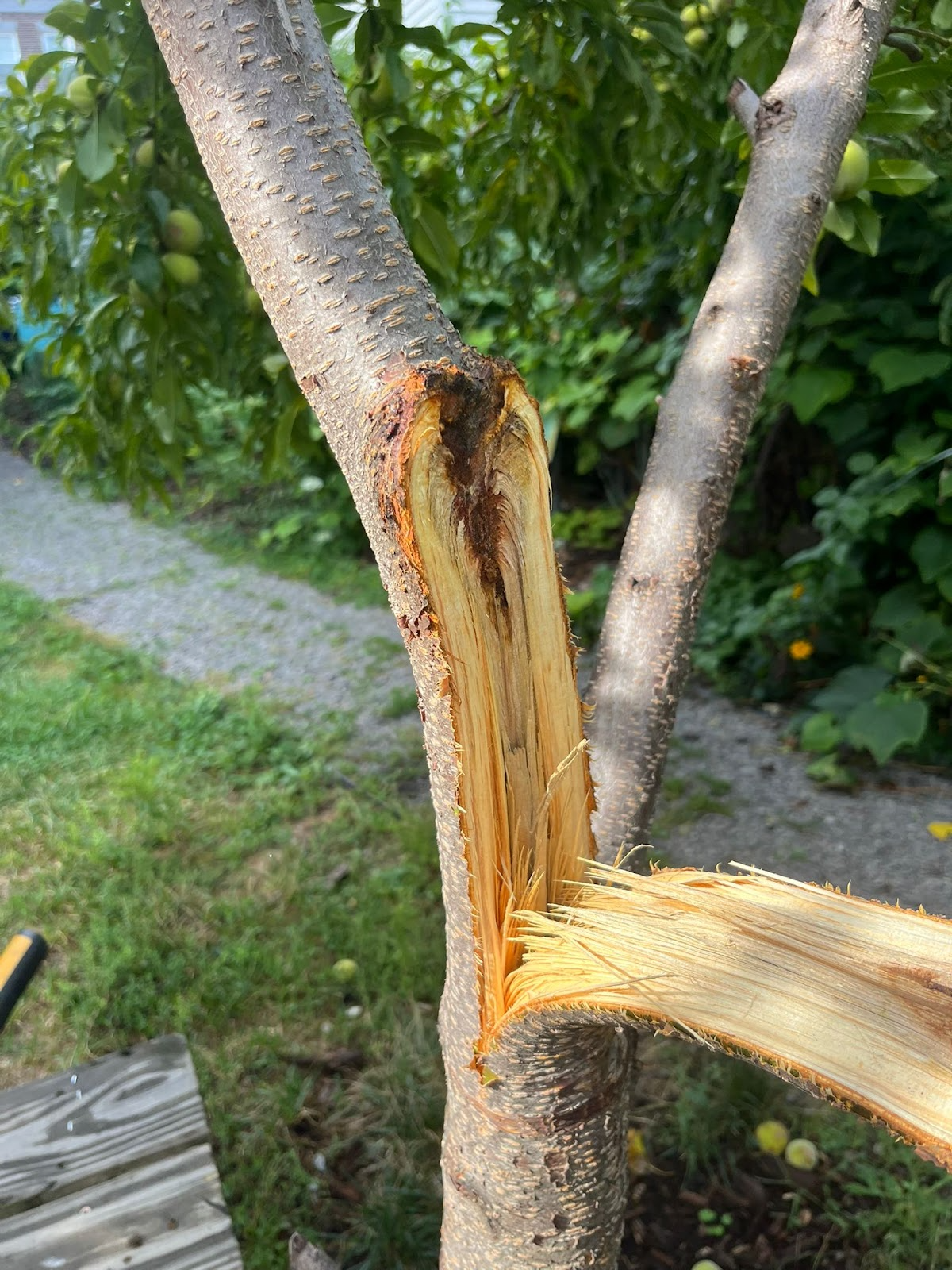
A schism in the night: our peach tree’s weak joint that split

Lesson learned. Pruning must be done correctly and punctually to prevent damage. Unfortunately past pruning left this tree with some weak spots. As you can see in the image below, the dark area of the wood is where the joint was not fused with the rest of the tree. This likely occurred from not pruning a branch that was growing at too steep of an angle. As the branch grew the bark prevented the cambium from fusing the branch better, resulting in a weak point that tore under the additional weight.
Weakened Tree Joint
- Harvest early and often
This is the tree’s second year fruiting and, despite stress from peachtree borers (more on that in a future post), this tree is an abundant producer. Our second lesson learned from this tree is the necessity of fruit thinning. In June the peach fruits develop all the cells they will have until the fruit matures; as the season progresses these cells fill with water, expanding in volume and in weight. Trees often produce more fruit than what they can bring to maturity, expecting to lose some prior to maturity. It is therefore recommended that fruit is thinned out in the spring.
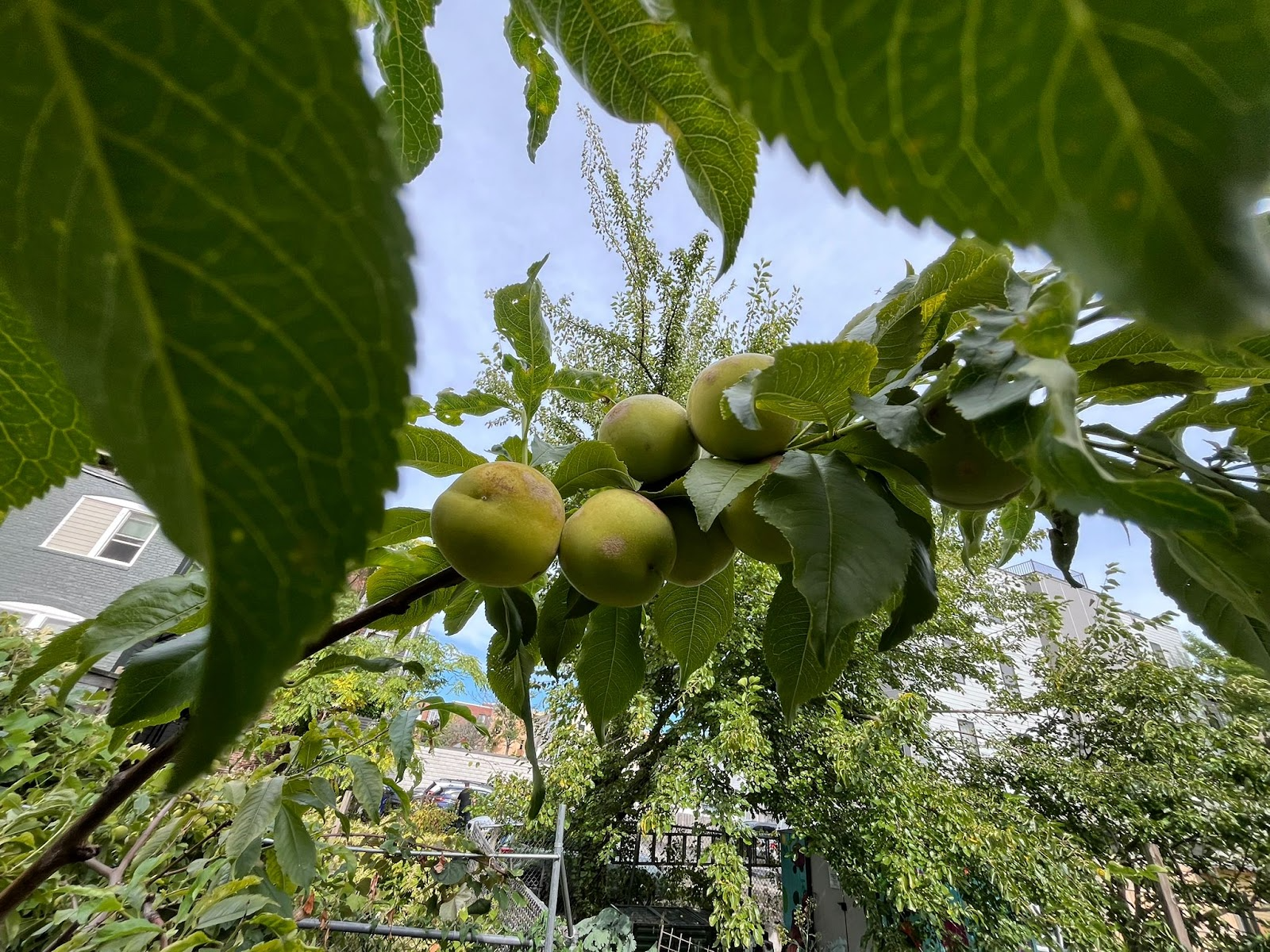
Over burdened branches before thinning – a hazard!
Like plants in your garden, the spacing recommended for fruit on a peach tree is 1 fruit every 6 to 8 linear inches. This means that roughly ⅔ of the fruit from peach trees needs to be removed 20 to 40 days after full bloom. This allows the fruit left on the tree to mature into high quality produce, but more importantly it prevents the tree from being overburdened by the excess growing fruit and breaking branches, as happened here.
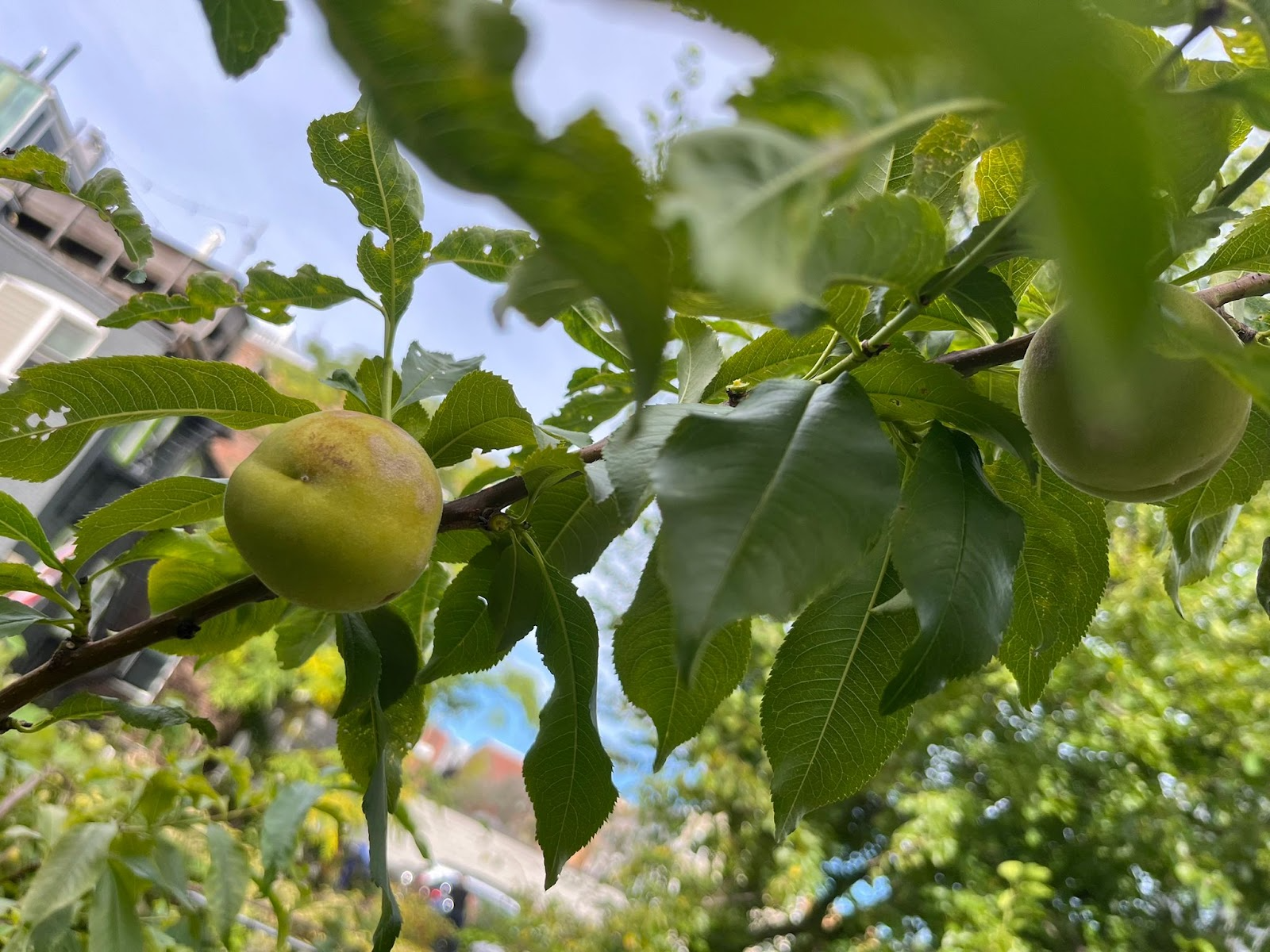
Same section of branch after thinning
